


It’s natural for a parent who wants to protect their child from every mistake. When they struggle, it's natural to want to step in, fix the problem, and help them avoid failure.
While this comes from a well-meaning place, shielding them from failure isn’t always the solution.
Too Much Success Leads to Failure
When children never have the chance to experience setbacks, they’re often less prepared when real challenges eventually come along. Research from Stanford psychologist Carol Dweck supports this idea, finding that children who see their abilities as fixed traits are more likely to be devastated by failure. Instead of viewing a poor result as a temporary setback, they see it as proof of a permanent limit.
This constant need to succeed is neither sustainable nor healthy, and could lead to anxiety, disengagement, and even depression within students according to research on perfectionism and the high-stakes achievement culture.
For example, a study from the University of Guelph found that students with high grades are more likely to cheat due to academic pressure and the fear of receiving a poor grade.
A child who hasn’t had the chance to experience failure doesn’t necessarily build more confidence. Instead, it can quietly narrow their ambitions, leaving them less willing to take on bigger challenges if there’s a risk they might not succeed.

Why Failure is Actually a Good Thing
Failure, reframed the right way, is a training ground — not a threat.
In her early research, Dweck gave young children a series of increasingly difficult puzzles. The results are that the children who were praised for their effort rather than their results weren't discouraged when they failed. They didn't even experience it as failure. They experienced it as learning in progress.
That's the heart of a growth mindset — the belief that ability isn't fixed, it's built through effort. Kids who adopt this mindset are more likely to embrace challenges and thrive under pressure, rather than fear every setback.
Each failure a child survives becomes proof that effort — not raw talent — is what actually moves the needle. By reframing mishaps or failures as learning opportunities instead of catastrophes, children build the exact kind of resilience for the rest of their lives.
Learning from Mishaps in Practice
This plays out vividly at BizKids Markets, where kids make decisions for their own business in the real world. They build products, set up booths, and sell directly to strangers.
At every BizKids Market, for every customer who said yes to a Kidpreneur, there were far more polite declines, quick walk-bys, and people who didn’t stop at all. Success wasn’t only handed to the kids who prepared the most. It went to those who could listen, adjust, and keep engaging after being turned down.
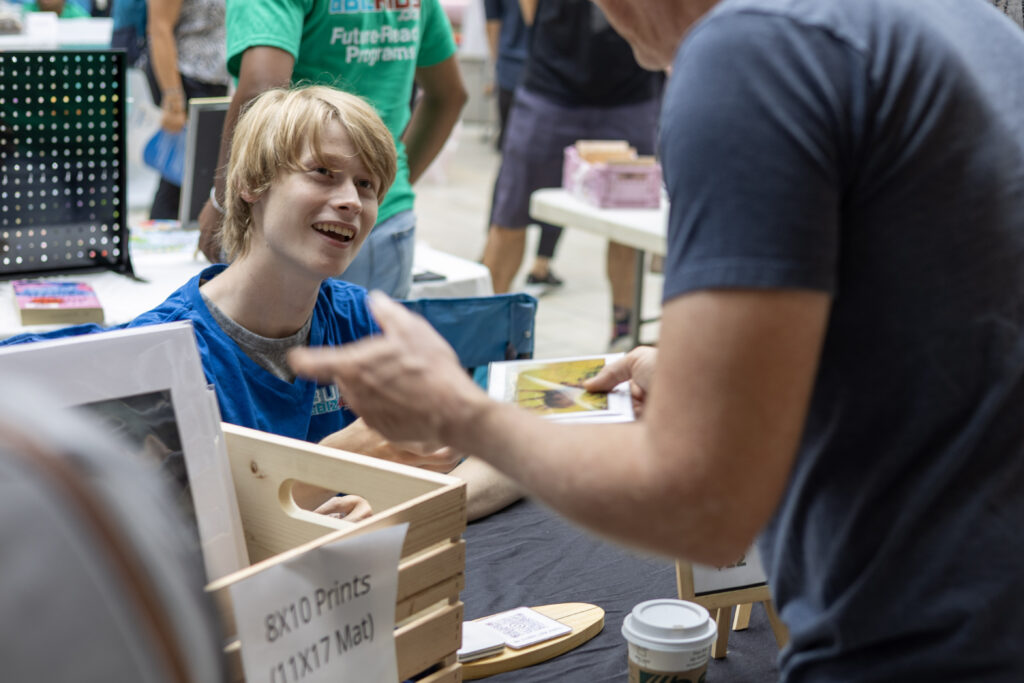
From lowering the price for a last-minute sale, to changing the way the Kidpreneurs interact with customers, their adaptability only occurs when they see setbacks as a lesson to be learnt.
The real value of the market experience is clear: It’s the resilience, tenacity, and self-awareness children build by absorbing rejection and trying again anyway. A child feels the sting of a “no”, pushes through it, and comes out the other side more confident — not just in their product, but in themselves.
See It Happen at the Next BizKids Winter Market
Want to witness this kind of growth in your child? Kid Vendor Applications are open for the next BizKids Winter Market happening on Saturday, November 28, 2026, from 11am–6pm at The City of Lougheed Mall in Burnaby.
60 young entrepreneurs, ages 7 to 16, will run their own booths and face real customer decisions in real time. Every “no thanks” is a setback they have to handle on their own — and every “yes” is a win they earned themselves.