

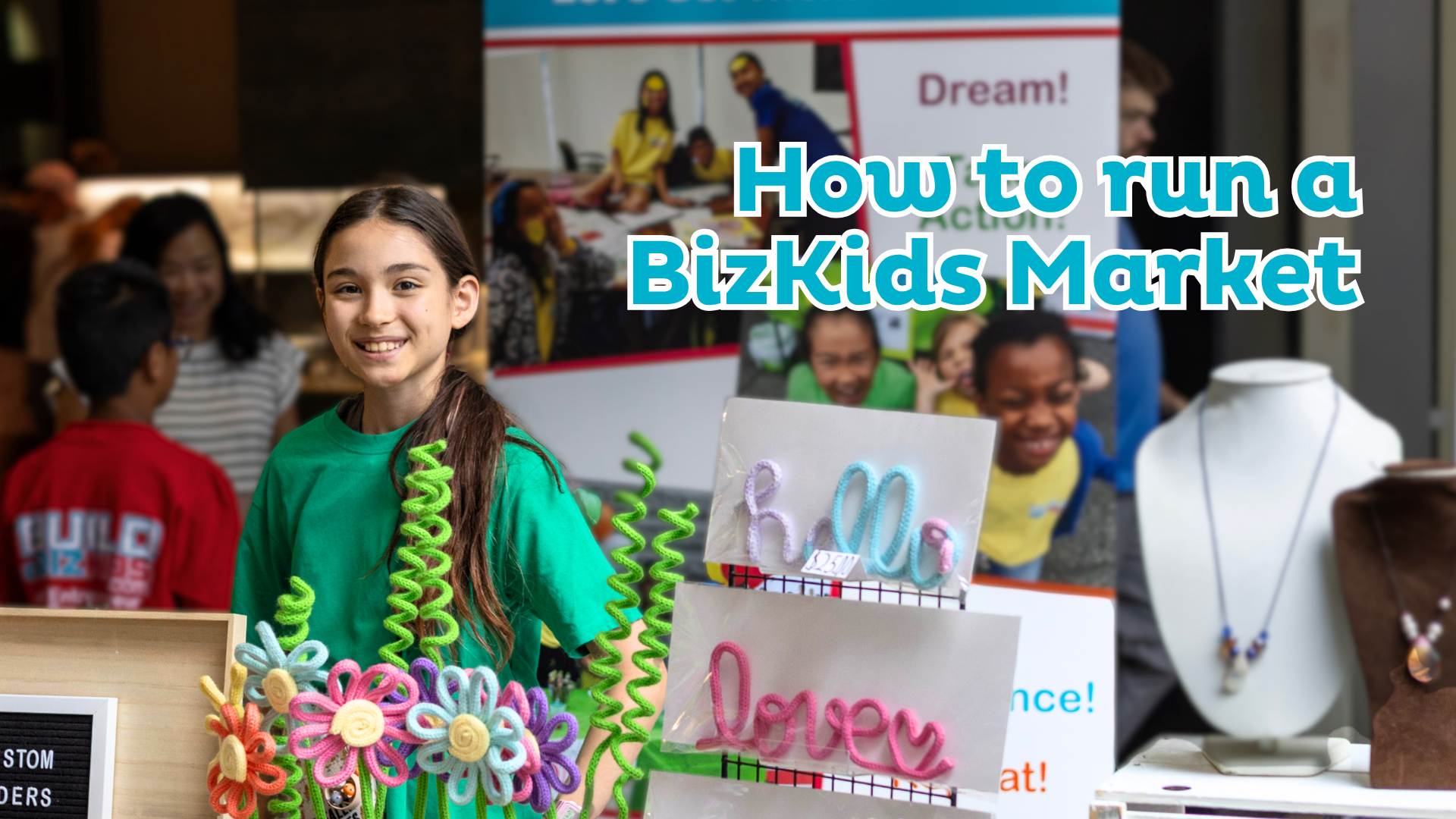
You have worked so hard creating a memorable experience for your students. In fact, you are probably going to be “THAT” teacher who they remember for years to come.
Now it’s time to hit it home with a market…. But how do you make it the best one yet?
For every KidPreneur, the market is the moment everything comes together. It’s where weeks of learning about budgeting, product development, and pitching turn into something real: a table, a sign, a handful of products, and a chance to sell to real customers. If you’re organizing a local BizKids market for the first time, here’s what we’ve learned from running them, and what to expect when your vendors are brand new to business.
When to Run It
The market takes place at exactly the right point in the program—after Class 7: Elevator Pitches & Customer Service and before Class 8: What’s Next & Graduation. By then, students have developed their product, built their brand, determined their pricing and packaging, refined their product display, and practiced how to confidently pitch and serve customers. The market is their opportunity to put everything they’ve learned into action. Then, in Class 8, they reflect on the experience, celebrate what they’ve accomplished, and consider what’s next before graduating.
Remember Who's Behind the Table
Unlike the Regional BizKids Markets we run in BC (which are open to experienced youth entrepreneurs), a local market you organize between Class 7 and Class 8 looks different. These are first-time vendors. Their signage might be hand-drawn. Their displays might be a shoebox covered in wrapping paper. Their pitches might be less refined.
That’s exactly how it should look. The goal isn’t a polished trade show, it’s a safe, encouraging space for kids to experience their first sale, their first customer conversation, and their first “I made this” moment.
You’ll likely be working with a smaller group than a regional market, often somewhere between 8 and 20 kid vendors, depending on how many students are in your program cohort(s).
Choosing a Venue
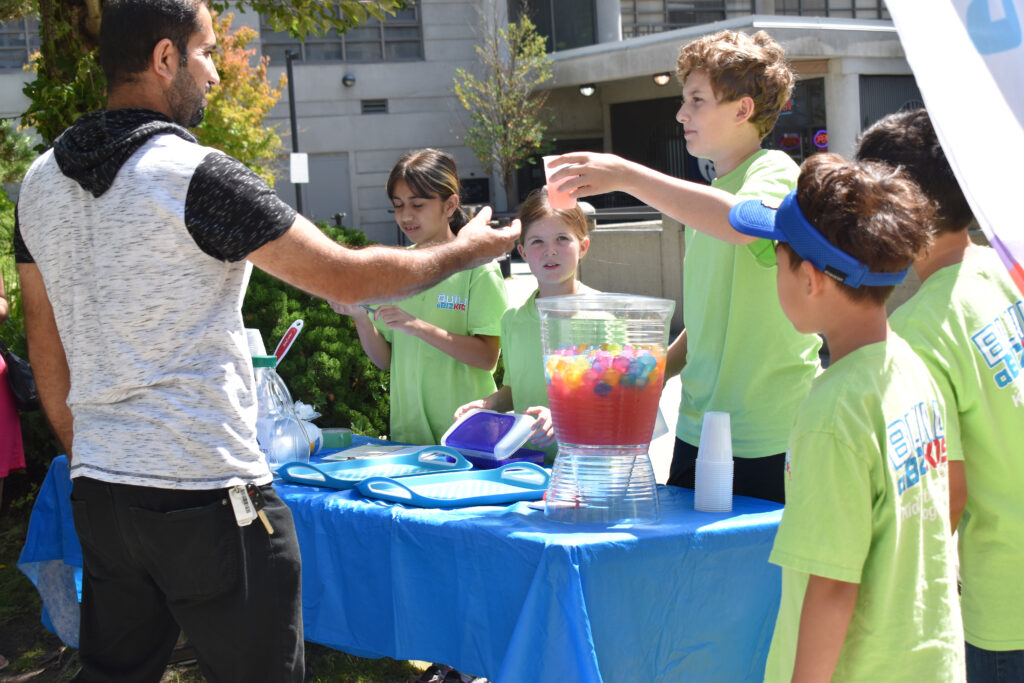
Where and how you run the market is entirely up to you. Some options that have worked well:
- Libraries — many are glad to host community events and may offer the space for free or low cost
- Community centres — a flexible, family-friendly venue that often has space available for community events and can help attract local visitors.
- School grounds — an easy, familiar option if you’re running the program through a school
- Malls — malls often love hosting kid markets as community events and foot-traffic draws
- Flea markets or farmers markets — piggyback on an existing event that already brings in shoppers
- Your own venue, if you have one
Whatever venue you choose, keep a few practical needs in mind: a reliable internet connection if you’re referencing the BizKids platform on market day, and enough open floor space for tables and foot traffic. If you’re using the same space for any final prep or debrief, a TV or screen with audio and a boardroom-style or pod layout works better than rows of desks, it keeps the energy collaborative rather than classroom-like.
Setting Up the Space
- Use 6-8 ft tables, and give each student half of one table for their business.
- Have a clear layout plan before kids arrive, know which student goes where, and mark tables ahead of time if you can.
- Leave space for parents, siblings, and visitors to move between tables comfortably.
Open It Up to the Public
One of the best things you can do for youth entrepreneurs is invite the public in. A market that’s just parents and classmates is nice, but a market with real community members browsing, asking questions, and buying is what makes the experience feel real. Promote it locally, through the venue itself, school or community newsletters, local social media groups, or partner organizations. BizKids also provides marketing materials, for social media, banners, posters, and newsletters, to help you build community awareness leading up to the event.
Make Them Feel Like a Team
Small touches make a big difference in how kids carry themselves on market day. Branded t-shirts, aprons, or nametags help students feel like part of something bigger, and they tend to look more professional in photos too, something families and your program will both appreciate.
Capturing the Moment (and Getting Consent Right)
If you’re planning to take photos or video of the market, get a media release waiver signed by parents ahead of time. If parents are taking their own photos at the event, remind them to only share pictures of their own child publicly, not other students.
A great addition to market day: interview each student on camera. It’s a nice keepsake for families, and the footage is genuinely useful for showing future cohorts what to expect. A few questions that work well:
- What is your name and the name of your business?
- Tell us about your products.
- What was your favourite part of the course, and why?
- What was your least favourite part, and why?
- What advice would you give to other kids who want to start their own business?
Let Kids Build With What They Have
Not every family will have access to the same materials, and that’s not a problem to solve, it’s part of the learning. Some ideas that work well no matter the budget:
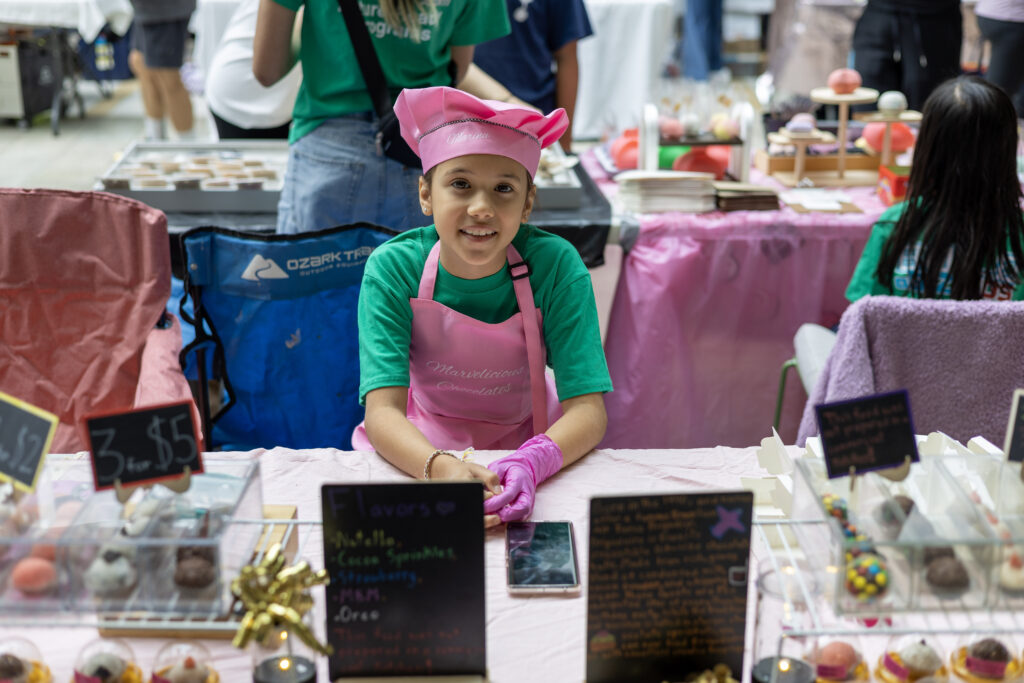
- Products made from things kids may already have access to: painted rocks, wood carvings, cardboard bookmarks or gift cards, baked goods from pantry staples
- Table displays built from recycled materials, like shipping boxes as risers under a sheet, hand-decorated signs made with crayons and paper, or décor already at home
For kids with access to more resources, they might choose to buy materials for something like crochet stuffies or 3D printed items. Both approaches are valid.
A Few First-Hand Tips
- Give kids a short window to set up and settle in before doors open, nerves are real, and a few quiet minutes helps.
- Encourage parents and volunteers to hang back and let kids do the selling and talking themselves, even if it’s imperfect.
- Have a volunteer or two circulating to help with things like change, spills, or a shy vendor who needs a confidence boost.
The Takeaway
A great BizKids local market isn’t about how polished it looks, it’s about giving kids an audience for something they built themselves. With the right timing, a simple setup, and a community willing to show support, you’ll give your KidPreneurs an experience they won’t forget.